Essential Tow Truck Equipment & Safety Standards in Australia
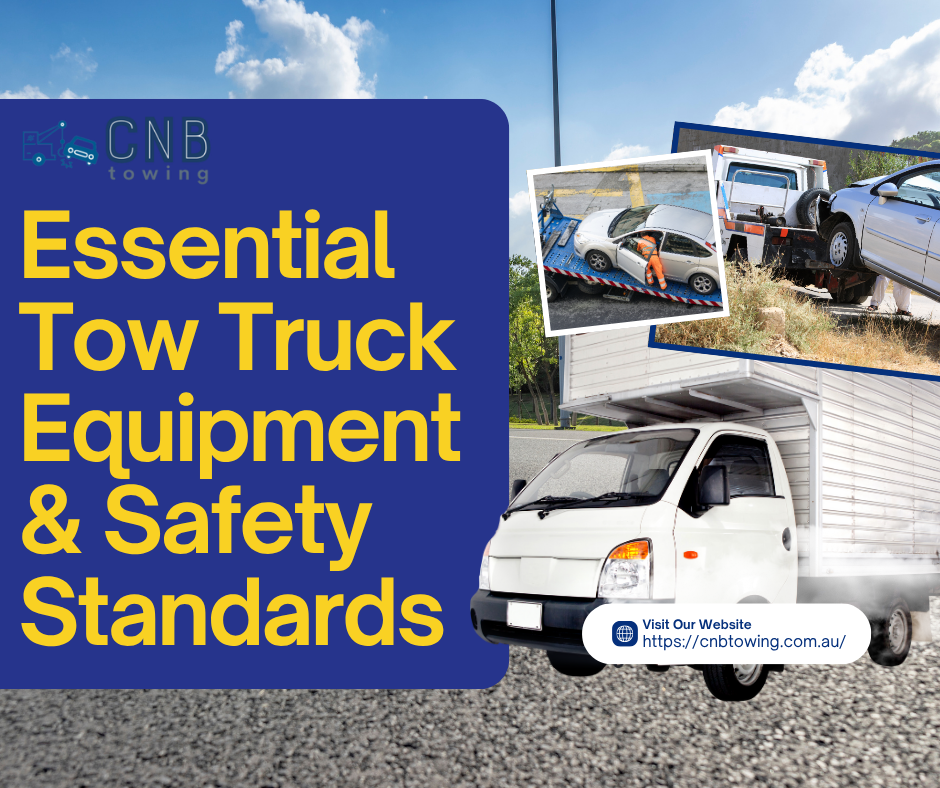
Every tow truck operating in Australia is legally required to meet minimum equipment and safety standards. These rules are set by state-based transport authorities like Transport for NSW, VicRoads, Department for Infrastructure and Transport SA (DIT), and Transport and Main Roads QLD (TMR). Still, the core expectations are generally aligned across all states.
Failing to comply can lead to fines, suspension of accreditation, or even impounding of the vehicle. For example, in Queensland, penalties for operating an unaccredited tow truck can reach $2,875. At the same time, in NSW, roadside compliance officers frequently conduct unannounced inspections.
This guide covers the essential tow truck equipment, mandatory safety features, and what each state expects from operators.
Safety Standards for Tow Trucks in Australia
1. Amber Warning Lights (Flashing Beacon)
These lights are used to alert other road users when the tow truck is operating on the roadside or actively loading/unloading a vehicle.
- The lights must be amber/yellow, not white, blue, or red (those are reserved for emergency vehicles).
- It must be visible from 360 degrees at a distance of at least 200 metres during both day and night.
- It should be mounted to the roof or another elevated, visible area.
2. High-Visibility Signage and Identification
Tow trucks must display:
- Company name
- Accreditation number
- Vehicle registration
- Contact phone number (in some states)
The signage must be permanently affixed, legible from both sides of the vehicle, and not obstructed by equipment or modifications.
This identification helps road authorities verify that the truck is authorised and traceable. In Victoria, failure to display the required signage can result in a defect notice and a possible fine under the Tow Truck Act 1973.
3. Fire Extinguisher
A 2kg (minimum) dry chemical fire extinguisher is legally required in all accredited tow trucks.
- Must comply with AS 2444:2001 (Australian Standard for Portable Fire Extinguishers).
- Should be mounted securely in the cabin or equipment area.
- Requires annual servicing by a certified technician and proper tagging.
Vehicle fires, especially after collisions, are a risk. A fire extinguisher gives the operator the ability to act immediately before emergency services arrive.
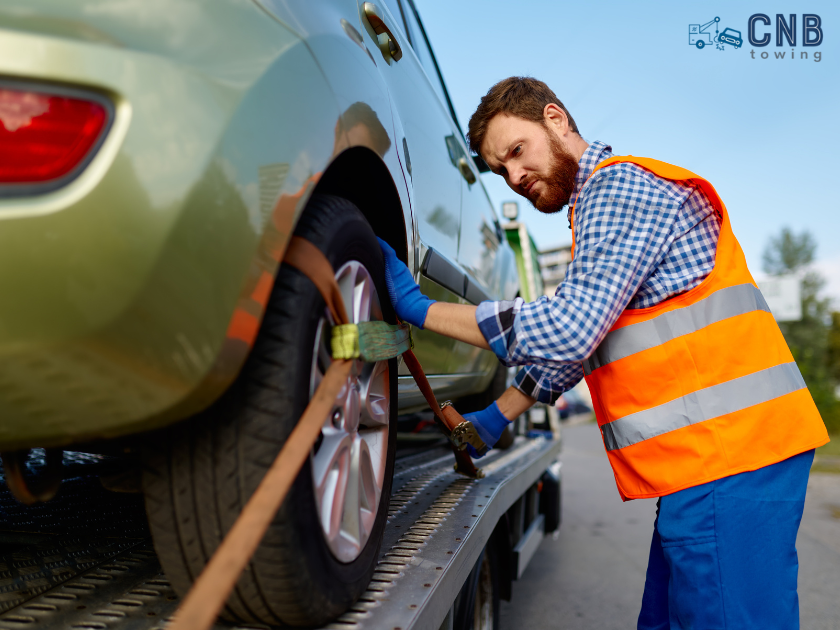
4. Tie-Down Straps and Wheel Restraints
All vehicles being towed must be secured using compliant restraints:
- Minimum 4-point restraint system
- Use of wheel straps, wheel nets, or tie-down chains
- Equipment must comply with Load Restraint Guide 2018 (NHVR)
According to the NHVR, unsecured loads account for over 25% of vehicle-related roadside safety incidents. Failing to secure a vehicle properly not only risks a fine but also creates a significant safety hazard for all road users.
5. Tow Lights or Auxiliary Rear Lighting
If the towed vehicle does not have functional tail lights, the tow truck operator is required to install:
- Removable magnetic lights
- Wired or wireless tail light kits
These lights must mimic brake lights, turn signals, and running lights, and be visible at all times during towing. It is enforced under general vehicle lighting compliance laws across all states and ADR 13/00.
6. Operator Safety Clothing (Hi-Vis)
Tow truck drivers are often working near moving traffic. Australian regulations require the use of Class D/N high-visibility clothing:
- Must meet AS/NZS 4602.1:2011 standards
- Should be worn during all roadside operations
- Includes vests, jackets, or full-cover shirts with reflective tape
Hi-vis clothing significantly reduces the chance of injury when operating in low-light or high-traffic areas. WorkSafe Australia data indicates roadside workers are 12 times more likely to be hit than other outdoor workers.
7. First Aid Kit
While not mandated in every state, a well-stocked first aid kit is considered best practice, and required in remote or regional service areas.
Minimum contents include:
- Bandages, saline, antiseptic wipes
- Burn gel and wound dressings
- Disposable gloves and a resuscitation mask
Recommended under the Safe Work Australia First Aid Code of Practice.
8. Winch, Boom & Hydraulic Equipment Standards
Towing equipment must be fully operational, regularly maintained, and logged.
- Winches must have a working load limit (WLL) suitable for the loads being towed
- Hydraulic arms, booms, and trays should be inspected monthly
- Maintenance records may be requested during audits
Malfunctioning recovery equipment can lead to accidents and void your insurance. NSW Fair Trading has reported multiple cases of equipment failure leading to legal action.
State-by-State Variations in Tow Truck Equipment Laws (Australia)
While most tow truck safety standards are consistent nationwide, each state and territory in Australia has slightly different requirements when it comes to equipment, signage, and licensing conditions. These differences are set by local transport authorities and enforced through audits, roadside checks, and annual inspections.
Here’s a breakdown of the significant variations by state:
1. New South Wales (NSW)
Regulating Body: NSW Fair Trading & Transport for NSW
Legislation: Tow Truck Industry Act 1998
- Amber lights and tow truck signage are mandatory.
- CCTV cameras may be required in accident-towing vehicles operating in controlled areas (e.g., the Sydney Metro).
- A vehicle standards certificate (pink slip) is needed for annual licensing.
- The truck must display a ‘TT’ number plate, showing it is registered as a licensed tow truck.
In controlled areas like Sydney, accident towing must follow a strict roster system and include fitted GPS tracking.
Source: NSW Tow Truck Licence Requirements
2. Victoria (VIC)
Regulating Body: VicRoads & Commercial Passenger Vehicles Victoria (CPVV)
Legislation: Accident Towing Services Act 2007
- Tow trucks involved in accident towing must meet roadworthiness and safety compliance checks every 12 months.
- Display of operator accreditation number and clear business signage is required on both sides of the vehicle.
- Must be fitted with a working beacon light and a hydraulic lifting device in accident tow vehicles.
- All drivers must wear Class D/N high-vis safety clothing during roadside operations.
Accident towing operators are subject to spot compliance checks and must maintain complete trip records.
Source: VIC Towing Guidelines
3. Queensland (QLD)
Regulating Body: Department of Transport and Main Roads (TMR)
Legislation: Tow Truck Act 1973 (QLD)
- Must have marked signage with accreditation and contact details.
- Cameras are required in some tow trucks (especially accident towing) to prevent disputes.
- All accident towing vehicles must be fitted with a hydraulic hoist or tilt tray.
- Two authorities must be issued and kept on file.
QLD mandates that operators must provide a Tow Truck Driver’s Certificate and carry it during all operations.
Source: QLD Tow Truck Scheme
4. South Australia (SA)
Regulating Body: Department for Infrastructure and Transport (DIT)
Legislation: Motor Vehicles Act 1959 (SA)
- Tow trucks must be mechanically inspected annually under the National Heavy Vehicle Inspection Scheme (NHVIS).
- Vehicles used for accident or trade towing must be registered as commercial vehicles.
- Two lights, tie-downs, and fire extinguishers are mandatory.
- Operators are encouraged to follow Chain of Responsibility (CoR) principles to ensure road safety compliance.
SA does not currently require tow trucks to operate under a roster system, but emphasises equipment compliance in commercial towing.
Source: SA Towing Requirements
5. Western Australia (WA)
Regulating Body: Department of Transport WA
Legislation: Road Traffic (Vehicles) Act 2012
- Must comply with load restraint regulations as per the WA Load Restraint Guide.
- Tow trucks used for commercial or salvage towing must be licensed and inspected annually.
- Public liability insurance is often a requirement for licensing.
- Mandatory use of high-vis clothing and a basic first aid kit in commercial vehicles.
Source: WA Vehicle Requirements
6. Tasmania (TAS)
Regulating Body: Department of State Growth
Legislation: General roadworthiness under the Vehicle and Traffic Act 1999
- Towing businesses must register as transport operators.
- Trucks must pass periodic roadworthiness inspections.
- No separate licence is required for tow trucks, but all must comply with general vehicle safety standards.
7. Northern Territory (NT) & ACT
- Fewer formal requirements due to lower commercial towing volume.
- Trucks must still comply with national load restraint guidelines and general road safety regulations.
Frequently Asked Questions
1. What equipment must a tow truck have in Australia?
All tow trucks in Australia must have amber warning lights, compliant signage, tie-down straps, fire extinguishers, tow lights (if needed), high-visibility clothing, and functioning hydraulic or winch systems. Both federal and state authorities enforce these.
2. Are flashing lights mandatory on tow trucks?
Yes. Amber flashing beacons are legally required on all tow trucks to alert other drivers when attending breakdowns or accident scenes. They must be visible from 200 metres in all directions.
3. Do tow truck operators need to wear safety gear?
Yes. Tow truck drivers are required to wear high-visibility clothing that complies with AS/NZS 4602.1:2011 during roadside operations. This improves visibility and reduces the risk of roadside accidents.
4. Is a fire extinguisher compulsory in a tow truck?
Yes. A 2kg dry chemical fire extinguisher is mandatory. It must be securely mounted and serviced annually, following AS 2444:2001 standards.
5. How often is tow truck equipment inspected?
In most states, tow trucks must undergo annual inspections. These include checks on lighting, restraints, hydraulics, brakes, and safety equipment. Some states also require logbook records for maintenance.
6. What happens if a tow truck fails a compliance check?
The vehicle can be issued a defect notice, fined, or taken off the road until it meets the required standards. In severe cases, operators may lose their towing licence or accreditation.
Conclusion: Why Tow Truck Equipment Standards Matter
Following tow truck equipment and safety standards isn’t just about ticking boxes, it protects drivers, other road users, and your business. From visibility gear to winch systems, every component plays a part in safe and legal towing.
Whether you’re operating a single truck or a fleet, meeting these standards helps you avoid fines, pass inspections, and maintain your license.
Why Choose CNB Towing for Compliant, Safe Towing in South Australia
At CNB Towing, we don’t cut corners. Every vehicle in our fleet meets — and often exceeds — Australian tow truck equipment and safety requirements. We regularly inspect and maintain our trucks to ensure:
- Fully compliant equipment
- Licensed and trained drivers
- 24/7 roadside support
- Transparent and professional service
We’re a South Australian business that understands local laws, road conditions, and customer expectations. Whether you’re a stranded driver or need scheduled towing, CNB Towing delivers safe, reliable, and legally compliant towing every time.
Need a tow or compliance advice? Contact CNB Towing