tow truck inspection in australia

Tow truck operators in Australia are subject to regular inspections and compliance audits to ensure their vehicles, equipment, and operations meet legal safety standards. State transport authorities carry out these checks and can be scheduled or unannounced.

Whether you run a single tow truck or a fleet, passing these inspections is essential for staying licensed and avoiding costly downtime. Failing an audit can lead to fines, defect notices, or even suspension of your towing accreditation.

This guide explains how tow truck inspections work in Australia, what inspectors look for, how often they occur, and the key steps you can take to ensure you remain compliant.

Types of Tow Truck Inspections in Australia

Tow truck inspections are designed to ensure vehicles meet the Australian Design Rules (ADRs) and the specific requirements of each state’s towing legislation. These checks can happen in several ways, depending on the state or territory where you operate.

1. Scheduled Annual Inspections

Most states require at least one formal inspection every 12 months for all accredited tow trucks.

These inspections are booked in advance at an authorised inspection station or a government transport facility.

Book Your Tow Truck Inspection Today with CNB Towing

What’s Checked:

  • Lighting and electrical systems (including amber beacons)
  • Hydraulic and winch operation
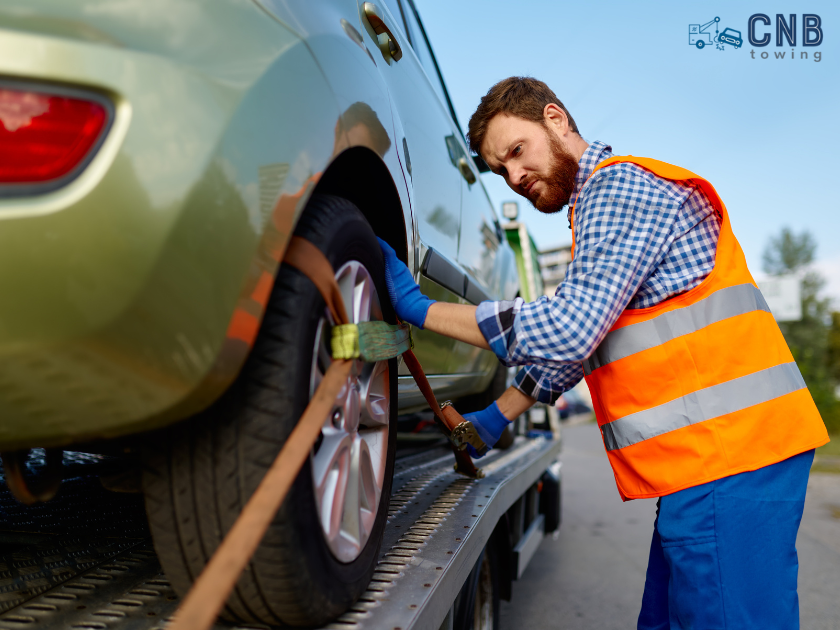
  • Load restraint equipment (wheel straps, chains)
  • Signage and vehicle identification
  • Braking systems and tyres
  • Fire extinguisher service dates

Example:

In South Australia, tow trucks fall under the National Heavy Vehicle Inspection Scheme (NHVIS), requiring annual inspections at DIT-approved facilities.

In Queensland, accident tow trucks must pass a yearly Certificate of Inspection (COI) conducted by an approved examiner.

2. Random Roadside Compliance Checks

Road transport inspectors and police have the authority to stop tow trucks for on-the-spot inspections.

These checks are standard in metropolitan accident zones and major highways.

What’s Checked:

  • Driver’s licence and tow truck accreditation
  • Visible safety issues (lights, tyre condition, load security)
  • Logbooks and trip records
  • High-visibility clothing and PPE compliance

Example:

In NSW, Fair Trading inspectors often conduct surprise roadside checks, particularly on high-volume accident corridors like the M4 and M5.

3. Post-Incident Inspections

If a tow truck is involved in a crash, mechanical fault, or reported safety breach, authorities may require an immediate inspection before it can return to service.

Why It Happens:

  • To determine if equipment failure contributed to an incident
  • To ensure the vehicle is still roadworthy
  • To confirm operator compliance with the Tow Truck Industry Act or equivalent legislation

4. Fleet Audits for Accredited Operators

Large towing companies may undergo compliance audits that review not just the trucks, but also:

  • Maintenance schedules
  • Staff training records
  • Insurance policies
  • Chain of Responsibility (CoR) procedures

These audits can take place every 1–3 years, depending on the operator’s risk profile.

Key Items Inspectors Look For

Tow truck inspections are highly structured, and inspectors follow detailed checklists aligned with state regulations and the Australian Design Rules (ADRs). Knowing these requirements in advance can help you avoid costly failures.

1. Vehicle Identification & Licensing

Inspectors confirm that the tow truck:

  • Displays a valid tow truck licence plate and operator number
  • Shows approved business signage in compliance with size and placement rules
  • Has up-to-date registration and insurance documents onboard

Example: 

In NSW, Fair Trading requires all licensed tow trucks to display the operator’s licence number in letters at least 50 mm high on both sides of the vehicle.

2. Safety Equipment

  • All safety gear must be present, functional, and within service dates. This includes:
  • At least one 2.5 kg fire extinguisher (tagged and tested within the last 12 months)
  • Wheel chocks and load restraint straps/chains compliant with AS/NZS 4380
  • Reflective triangles and high-visibility vests for operators

According to the NHVAS Safety Report, nearly 18% of tow truck compliance failures involve expired or missing safety equipment.

3. Mechanical Condition

Inspectors assess critical systems to ensure the vehicle is safe to operate:

  • Brakes and brake lines
  • Steering components
  • Suspension and tyres (tread depth ≥ 1.5 mm for light vehicles; ≥ 3 mm for heavy tow trucks)
  • Hydraulic systems (no leaks, smooth operation)
  • Lights and indicators, including hazard and amber beacons

4. Towing & Recovery Equipment

Tow trucks must carry and maintain all required recovery gear, including:

  • Winches and cables in good condition (no fraying or corrosion)
  • Two bars and hooks compliant with ADR 62/02
  • Under-lift arms and wheel lifts with no excessive wear.

In Victoria, VicRoads inspectors regularly fail vehicles for damaged winch cables or missing safety catches.

5. Operator Records & Compliance Paperwork

For complete compliance, inspectors often review:

  • Maintenance logs showing regular servicing
  • Operator accreditation cards for all drivers
  • Load restraint training certificates
  • Trip sheets and job records

Some states, like Queensland, now accept digital records, but operators must ensure they’re accessible during inspections.

tow truck inspection and audit

How Often Tow Truck Inspections Occur in Each State

Tow truck inspection frequency varies across Australia, but all states require at least one annual safety inspection for licensed vehicles. High-risk operators or those with past compliance issues may face more frequent checks.

  • New South Wales (NSW)

Annually for licensed tow trucks; additional random roadside inspections possible.

Authority: NSW Fair Trading & NSW Police.

Heavy tow trucks over 4.5 tonnes must also undergo an Annual Heavy Vehicle Inspection under the Roads and Maritime Services (RMS) scheme.

  • Victoria (VIC)

Annual inspection required for accreditation renewal; random roadside audits by VicRoads or Victoria Police.

Authority: VicRoads Tow Truck Licensing Scheme.

Any major mechanical repair must be followed by a compliance recheck before the vehicle returns to service.

  • Queensland (QLD)

Annual Certificate of Inspection (COI) required for all tow trucks. High-volume operators may be inspected twice yearly.

Authority: Queensland Department of Transport and Main Roads (TMR).

In 2023, QLD TMR reported that 15% of tow truck inspections resulted in defect notices, often for brake and lighting issues.

  • South Australia (SA)

Annual roadworthiness check plus random audits by SA Police or Department for Infrastructure and Transport.

Authority: SA Department for Infrastructure and Transport.

Any vehicle involved in a significant crash must be reinspected before returning to service.

  • Western Australia (WA)

Annual inspection for heavy tow trucks; light tow trucks follow standard vehicle licensing inspections.

Authority: Department of Transport WA.

Regional operators may have to attend central inspection depots, which can require booking.

  • Tasmania (TAS)

Annual roadworthy inspection; additional checks after major modifications.

Authority: Transport Tasmania.

Tow trucks used for salvage work in hazardous areas may face safety audits from WorkSafe Tasmania.

Australian Capital Territory (ACT) & Northern Territory (NT)

Annual roadworthy check; occasional random audits.

Authority: Access Canberra (ACT) & Department of Infrastructure, Planning and Logistics (NT).

Tip: Keeping accurate maintenance logs and ensuring safety gear is always ready can help you pass both scheduled and surprise inspections without delays.

Common Reasons Tow Trucks Fail Inspections

While most tow truck operators maintain their vehicles to a safe standard, compliance data from state transport authorities shows that mechanical issues and missing safety equipment are the leading causes of inspection failures.

1. Brake System Defects

Brake system defects are one of the most common defects flagged in QLD, NSW, and VIC. it includes Worn brake pads, fluid leaks, and unbalanced braking performance.

Tow trucks with brake defects are immediately grounded until repairs are made.

2. Faulty or Missing Lights

Common Issues are non-functioning headlights, brake lights, indicator lamps, and amber NSW RMS roadside checks in 2022 found that 12% of heavy tow trucks had at least one faulty light.

3. Tyre Wear and Damage

Signs including bald tyres, sidewall cracks, and mismatched tyre ratings.

Standard: Tyre tread depth must meet the Australian Design Rules (ADR) minimum of 1.5mm for light vehicles and 3mm for heavy tow trucks.

4. Missing or Outdated Safety Equipment

Fire extinguishers without current tags, missing wheel chocks, damaged tie-down straps.

Tip: Keep a monthly checklist for all onboard safety gear, many operators fail audits over easily preventable lapses.

5. Excessive Oil Leaks

Leaks from the engine, gearbox, or hydraulics not only fail inspections but also pose environmental hazards.

Persistent leaks can trigger defect notices under the Australian Vehicle Standards Rules.

6. Poor Signage & Markings

Clear company name, tow truck licence number, and emergency contact number must be displayed.

Faded paint or incorrect font sizes are failures of tow truck inspection

Queensland TMR’s compliance report noted that brake issues, tyre defects, and faulty lights made up over 70% of all tow truck inspection failures.

Key Steps to Stay Compliant

Keep Detailed Maintenance Records:

Document all repairs, servicing, and inspections for at least 12 months, as authorities may request proof during audits.

Conduct Pre-Trip Checks:

Inspect brakes, lights, tyres, hydraulic systems, and safety equipment before every job.

Stay Updated on Regulations:

  • Laws differ by state, so regularly review your state transport authority’s guidelines.
  • Train Your Drivers:
  • Ensure all operators understand safety protocols, load limits, and emergency procedures.

Schedule Internal Audits:

Conduct your compliance checks at least quarterly to identify and address issues early.

Schedule a Compliance Check with Our Experts at CNB Towing

Conclusion

Tow truck inspections and compliance audits are vital safeguards for road safety, operational reliability, and your business reputation. By understanding the inspection types, knowing what authorities look for, and maintaining your vehicle to the required standards, you reduce downtime, avoid costly penalties, and maintain trust with customers.

Compliance is an ongoing process. Keeping detailed maintenance records, running your internal checks, and staying updated on state regulations will keep your tow truck on the road and your licence in good standing.

Frequently Asked Questions (FAQs)

1. How often are tow truck inspections carried out in Australia?

Frequency varies by state. For example, NSW requires annual inspections for accredited tow trucks, while QLD may conduct random roadside checks in addition to scheduled inspections.

2. Who conducts tow truck compliance audits?

State transport authorities (such as Transport for NSW, QLD TMR, or VIC Roads) carry out both scheduled and unannounced audits to check safety, licensing, and operational compliance.

3. What documents should I have ready for an inspection?

Commonly requested documents include tow truck accreditation, driver’s licence, maintenance logs, and proof of insurance.

4. Can I keep operating if I fail an inspection?

It depends on the severity of the defect. Minor issues may require repairs within a set timeframe, while major safety defects can lead to immediate grounding.

5. How can I prepare for an unannounced audit?

Keep all equipment in working order, ensure your safety gear is up-to-date, and regularly review your compliance checklist. Being inspection-ready at all times is the best defence.

Why Choose CNB Towing

At CNB Towing, we operate with safety and compliance at the core of our service. Our tow trucks are maintained to exceed Australian safety standards, and our drivers are fully trained in both operational and legal requirements. We use a proactive inspection approach, ensuring our fleet is audit-ready at all times, so when you choose us, you’re choosing reliability, safety, and a team that values professionalism above all else.

Whether it’s roadside assistance, accident recovery, or scheduled transport, you can count on CNB Towing to deliver prompt, compliant, and expert towing solutions across South Australia.

Keep Your Fleet Legal and Safe, Partner with CNB Towing
Go back

Your message has been sent

Warning
Warning
Warning
Warning

Warning.

Essential Tow Truck Equipment & Safety Standards

Every tow truck operating in Australia is legally required to meet minimum equipment and safety standards. These rules are set by state-based transport authorities like Transport for NSW, VicRoads, Department for Infrastructure and Transport SA (DIT), and Transport and Main Roads QLD (TMR). Still, the core expectations are generally aligned across all states.

Failing to comply can lead to fines, suspension of accreditation, or even impounding of the vehicle. For example, in Queensland, penalties for operating an unaccredited tow truck can reach $2,875. At the same time, in NSW, roadside compliance officers frequently conduct unannounced inspections.

This guide covers the essential tow truck equipment, mandatory safety features, and what each state expects from operators.

Safety Standards for Tow Trucks in Australia

1. Amber Warning Lights (Flashing Beacon)

These lights are used to alert other road users when the tow truck is operating on the roadside or actively loading/unloading a vehicle.

  • The lights must be amber/yellow, not white, blue, or red (those are reserved for emergency vehicles).
  • It must be visible from 360 degrees at a distance of at least 200 metres during both day and night.
  • It should be mounted to the roof or another elevated, visible area.

2. High-Visibility Signage and Identification

Tow trucks must display:

  • Company name
  • Accreditation number
  • Vehicle registration
  • Contact phone number (in some states)

The signage must be permanently affixed, legible from both sides of the vehicle, and not obstructed by equipment or modifications.

This identification helps road authorities verify that the truck is authorised and traceable. In Victoria, failure to display the required signage can result in a defect notice and a possible fine under the Tow Truck Act 1973.

3. Fire Extinguisher

A 2kg (minimum) dry chemical fire extinguisher is legally required in all accredited tow trucks.

  • Must comply with AS 2444:2001 (Australian Standard for Portable Fire Extinguishers).
  • Should be mounted securely in the cabin or equipment area.
  • Requires annual servicing by a certified technician and proper tagging.

Vehicle fires, especially after collisions, are a risk. A fire extinguisher gives the operator the ability to act immediately before emergency services arrive.

4. Tie-Down Straps and Wheel Restraints

All vehicles being towed must be secured using compliant restraints:

  • Minimum 4-point restraint system
  • Use of wheel straps, wheel nets, or tie-down chains
  • Equipment must comply with Load Restraint Guide 2018 (NHVR)

According to the NHVR, unsecured loads account for over 25% of vehicle-related roadside safety incidents. Failing to secure a vehicle properly not only risks a fine but also creates a significant safety hazard for all road users.

5. Tow Lights or Auxiliary Rear Lighting

If the towed vehicle does not have functional tail lights, the tow truck operator is required to install:

  • Removable magnetic lights
  • Wired or wireless tail light kits

These lights must mimic brake lights, turn signals, and running lights, and be visible at all times during towing. It is enforced under general vehicle lighting compliance laws across all states and ADR 13/00.

6. Operator Safety Clothing (Hi-Vis)

Tow truck drivers are often working near moving traffic. Australian regulations require the use of Class D/N high-visibility clothing:

  • Must meet AS/NZS 4602.1:2011 standards
  • Should be worn during all roadside operations
  • Includes vests, jackets, or full-cover shirts with reflective tape

Hi-vis clothing significantly reduces the chance of injury when operating in low-light or high-traffic areas. WorkSafe Australia data indicates roadside workers are 12 times more likely to be hit than other outdoor workers.

7. First Aid Kit

While not mandated in every state, a well-stocked first aid kit is considered best practice, and required in remote or regional service areas.

Minimum contents include:

  • Bandages, saline, antiseptic wipes
  • Burn gel and wound dressings
  • Disposable gloves and a resuscitation mask

Recommended under the Safe Work Australia First Aid Code of Practice.

8. Winch, Boom & Hydraulic Equipment Standards

Towing equipment must be fully operational, regularly maintained, and logged.

  • Winches must have a working load limit (WLL) suitable for the loads being towed
  • Hydraulic arms, booms, and trays should be inspected monthly
  • Maintenance records may be requested during audits

Malfunctioning recovery equipment can lead to accidents and void your insurance. NSW Fair Trading has reported multiple cases of equipment failure leading to legal action.


towing service near me

State-by-State Variations in Tow Truck Equipment Laws (Australia)

While most tow truck safety standards are consistent nationwide, each state and territory in Australia has slightly different requirements when it comes to equipment, signage, and licensing conditions. These differences are set by local transport authorities and enforced through audits, roadside checks, and annual inspections.

Here’s a breakdown of the significant variations by state:

1. New South Wales (NSW)

Regulating Body: NSW Fair Trading & Transport for NSW

Legislation: Tow Truck Industry Act 1998

  • Amber lights and tow truck signage are mandatory.
  • CCTV cameras may be required in accident-towing vehicles operating in controlled areas (e.g., the Sydney Metro).
  • A vehicle standards certificate (pink slip) is needed for annual licensing.
  • The truck must display a ‘TT’ number plate, showing it is registered as a licensed tow truck.

In controlled areas like Sydney, accident towing must follow a strict roster system and include fitted GPS tracking.

Source: NSW Tow Truck Licence Requirements

2. Victoria (VIC)

Regulating Body: VicRoads & Commercial Passenger Vehicles Victoria (CPVV)

Legislation: Accident Towing Services Act 2007

  • Tow trucks involved in accident towing must meet roadworthiness and safety compliance checks every 12 months.
  • Display of operator accreditation number and clear business signage is required on both sides of the vehicle.
  • Must be fitted with a working beacon light and a hydraulic lifting device in accident tow vehicles.
  • All drivers must wear Class D/N high-vis safety clothing during roadside operations.

Accident towing operators are subject to spot compliance checks and must maintain complete trip records.

Source: VIC Towing Guidelines

3. Queensland (QLD)

Regulating Body: Department of Transport and Main Roads (TMR)

Legislation: Tow Truck Act 1973 (QLD)

  • Must have marked signage with accreditation and contact details.
  • Cameras are required in some tow trucks (especially accident towing) to prevent disputes.
  • All accident towing vehicles must be fitted with a hydraulic hoist or tilt tray.
  • Two authorities must be issued and kept on file.

QLD mandates that operators must provide a Tow Truck Driver’s Certificate and carry it during all operations.

Source: QLD Tow Truck Scheme

4. South Australia (SA)

Regulating Body: Department for Infrastructure and Transport (DIT)

Legislation: Motor Vehicles Act 1959 (SA)

  • Tow trucks must be mechanically inspected annually under the National Heavy Vehicle Inspection Scheme (NHVIS).
  • Vehicles used for accident or trade towing must be registered as commercial vehicles.
  • Two lights, tie-downs, and fire extinguishers are mandatory.
  • Operators are encouraged to follow Chain of Responsibility (CoR) principles to ensure road safety compliance.

SA does not currently require tow trucks to operate under a roster system, but emphasises equipment compliance in commercial towing.

Source: SA Towing Requirements

5. Western Australia (WA)

Regulating Body: Department of Transport WA

Legislation: Road Traffic (Vehicles) Act 2012

  • Must comply with load restraint regulations as per the WA Load Restraint Guide.
  • Tow trucks used for commercial or salvage towing must be licensed and inspected annually.
  • Public liability insurance is often a requirement for licensing.
  • Mandatory use of high-vis clothing and a basic first aid kit in commercial vehicles.

Source: WA Vehicle Requirements

6. Tasmania (TAS)

Regulating Body: Department of State Growth

Legislation: General roadworthiness under the Vehicle and Traffic Act 1999

  • Towing businesses must register as transport operators.
  • Trucks must pass periodic roadworthiness inspections.
  • No separate licence is required for tow trucks, but all must comply with general vehicle safety standards.

7. Northern Territory (NT) & ACT

  • Fewer formal requirements due to lower commercial towing volume.
  • Trucks must still comply with national load restraint guidelines and general road safety regulations.

Frequently Asked Questions

1. What equipment must a tow truck have in Australia?

All tow trucks in Australia must have amber warning lights, compliant signage, tie-down straps, fire extinguishers, tow lights (if needed), high-visibility clothing, and functioning hydraulic or winch systems. Both federal and state authorities enforce these.

2. Are flashing lights mandatory on tow trucks?

Yes. Amber flashing beacons are legally required on all tow trucks to alert other drivers when attending breakdowns or accident scenes. They must be visible from 200 metres in all directions.

3. Do tow truck operators need to wear safety gear?

Yes. Tow truck drivers are required to wear high-visibility clothing that complies with AS/NZS 4602.1:2011 during roadside operations. This improves visibility and reduces the risk of roadside accidents.

4. Is a fire extinguisher compulsory in a tow truck?

Yes. A 2kg dry chemical fire extinguisher is mandatory. It must be securely mounted and serviced annually, following AS 2444:2001 standards.

5. How often is tow truck equipment inspected?

In most states, tow trucks must undergo annual inspections. These include checks on lighting, restraints, hydraulics, brakes, and safety equipment. Some states also require logbook records for maintenance.

6. What happens if a tow truck fails a compliance check?

The vehicle can be issued a defect notice, fined, or taken off the road until it meets the required standards. In severe cases, operators may lose their towing licence or accreditation.

Conclusion: Why Tow Truck Equipment Standards Matter

Following tow truck equipment and safety standards isn’t just about ticking boxes, it protects drivers, other road users, and your business. From visibility gear to winch systems, every component plays a part in safe and legal towing.

Whether you’re operating a single truck or a fleet, meeting these standards helps you avoid fines, pass inspections, and maintain your license.

Why Choose CNB Towing for Compliant, Safe Towing in South Australia

At CNB Towing, we don’t cut corners. Every vehicle in our fleet meets — and often exceeds — Australian tow truck equipment and safety requirements. We regularly inspect and maintain our trucks to ensure:

  • Fully compliant equipment
  • Licensed and trained drivers
  • 24/7 roadside support
  • Transparent and professional service

We’re a South Australian business that understands local laws, road conditions, and customer expectations. Whether you’re a stranded driver or need scheduled towing, CNB Towing delivers safe, reliable, and legally compliant towing every time.

Need a tow or compliance advice? Contact CNB Towing

Go back

Your message has been sent

Warning
Warning
Warning
Warning

Warning.

Tow Truck regulations in Australia

Have you ever found yourself needing to tow a vehicle but unsure if you’re doing it safely? Whether you’re using a tow truck or a private vehicle, safe towing requires more than just strength and a sturdy tow hitch—it demands knowledge, preparation, and a strong commitment to safety. In South Australia, tow truck operators and private drivers alike must follow key safety rules, including adhering to speed limits, maintaining safe following distances, and ensuring that both the tow vehicle and trailer are roadworthy.

It involves regular checks on tyres, lights, brakes, and safety chains. Staying informed about towing laws and load regulations—such as permitted load sizes and braking requirements—is essential not only for compliance but also for preventing accidents and fines.

In this guide, we’ve compiled essential safety tips based on reliable government sources and industry best practices. So whether you’re towing for the first time or doing it regularly, you’ll have the confidence to do it safely and legally.

An Overview of Towing Regulations in Australia

Towing regulations in Australia vary slightly between states and territories, but all are designed to ensure road safety and protect vehicles, property, and lives. Whether you’re operating a tow truck or towing a car, caravan, boat, or trailer, understanding the legal requirements is essential before hitting the road. Each state outlines specific rules regarding speed limits, braking systems, load limits, and tow vehicle capabilities—so staying informed is key to safe and compliant towing.

At a national level, drivers are expected to follow basic towing standards while delivering tow truck services across Australia, such as:

  • Ensuring the combined mass of the towing vehicle and trailer does not exceed legal limits (GCM – Gross Combination Mass).
  • Using properly rated towing equipment, including tow bars and couplings.
  • Making sure safety chains are used and correctly secured.
  • Ensuring the trailer’s braking system is functional if required by law (usually for trailers over 750 kg).
  • Ensuring visibility is not obstructed, using towing mirrors when necessary.

Each Australian state and territory enforces its own specific rules regarding speed limits while towing, trailer dimensions, weight limits, and licensing requirements—whether you’re driving a tow truck or towing with a private vehicle. For example:

  • In New South Wales, trailers must not exceed 2.5 metres in width and 4.3 metres in height.
  • In Queensland, the maximum towing speed is 100 km/h unless road signs state otherwise.
  • In South Australia, drivers must maintain a minimum following distance of 60 metres from heavy vehicles when towing.

To stay compliant, it’s crucial to review the towing regulations specific to your state. Many transport departments offer detailed fact sheets or online tools to help determine whether your towing setup is legal.

If you’re towing across state borders, be aware that you’ll need to follow the laws of each state you travel through.

Make Sure You’re Towing Legally

Tow Truck regulations in Australia

Tow Truck Road Safety & Towing Best Practices in Australia

Towing safely on Australian roads requires more than meeting the minimum legal standards—it’s about adopting best practices that protect you, your vehicle, and everyone around you. Whether you’re navigating the city or hauling a load across long regional highways, the following practices are essential for safe and stress-free towing.

1. Pre-Tow Inspection is Non-Negotiable

Always inspect both the towing vehicle and the trailer—or tow truck—before setting off. Check the tyre pressure (including the spare), ensure all lights, indicators, and brake lights are fully functional, and confirm that all load attachments, safety chains, and connections are secure. Taking just a few minutes for a thorough pre-trip check can help prevent breakdowns, avoid accidents, and ensure compliance with road safety regulations.

2. Distribute Weight Evenly

Uneven or overloaded trailers are a significant cause of sway and loss of control. Aim for around 60% of the load’s weight to be in the front half of the trailer. Never exceed your vehicle’s tow ball download limit or maximum towing capacity.

3. Use Safety Chains and Correct Hitching Gear

Always use properly rated safety chains crossed under the tow bar to prevent the trailer from hitting the ground if disconnected. Make sure your tow ball, coupling, and hitch are compliant with Australian Design Rules (ADRs) and are correctly secured.

4. Adjust Driving Style

Towing requires more stopping distance, wider turns, and slower acceleration. Increase your following distance to at least 5 seconds, and allow for extra braking time. Avoid sudden lane changes and reduce speed in wet or windy conditions.

5. Install and Use Towing Mirrors

If your trailer is wider than your vehicle, towing mirrors are legally required to maintain rear visibility. Adjustable, extended mirrors help eliminate blind spots and improve confidence when changing lanes or reversing.

6. Avoid Towing Fatigue

Towing can be more physically and mentally demanding than regular driving. Schedule regular rest breaks—every two hours—and avoid driving at night if visibility is poor.

7. Practice Trailer Reversing

Reversing a trailer takes practice and patience. Use a safe, open space to refine your technique. Go slow, make small steering inputs, and don’t be afraid to get out and check your position if needed.

8. Stay Informed About Weather and Road Conditions

Before setting off, check road closures, high wind warnings, or heavy rain conditions—especially in regional or outback areas. Towing in poor conditions dramatically increases risk.

Need Reliable Tow Truck Support?
Don’t wait—CNB Towing is here when you need us most.
  Contact Us Now for professional help.

Resources for Further Information About Towing Rules in Australia

For drivers seeking to tow safely and legally across Australia, it’s essential to consult official and up-to-date information from government transport departments. Below are trusted resources to help you stay informed:

State and Territory Government Websites

National Standards & Technical Guidelines

  • National Heavy Vehicle Regulator (NHVR) www.nhvr.gov.au
  • For commercial and heavy towing regulations across state borders.
  • Australian Design Rules (ADR) Vehicle Safety Standards
  • Technical requirements for towing equipment, trailers, and coupling systems.

Quick Tip:

Bookmark your state’s towing guide if you tow regularly—it’s the best way to stay compliant and avoid fines or mechanical issues on the road.

Tow With Confidence—We’re Here to Help

Towing safely isn’t just about following the rules—it’s about having the proper support when you need it most. That’s why CNB Towing committed to providing fast, reliable, and professional tow truck services across South Australia, 24 hours a day.

Whether you’re towing a caravan, trailer, or vehicle, navigating road safety laws and legal requirements can be overwhelming. But don’t stress—we’re here to make it simple. Our experienced team takes the guesswork out of the process, ensuring every tow is handled safely, efficiently, and in full compliance with South Australian regulations.

Visit CNB towing to book a tow, request a quote, or speak with a friendly team member today.

Your journey matters. Let us help you move forward—safely and confidently.

Frequently Asked Questions

1. Are towing mirrors mandatory when using a trailer or caravan?

Yes. If your trailer or caravan is wider than your towing vehicle, you’re required by law to use extended towing mirrors to maintain a clear view of the rear. Driving without adequate visibility can lead to fines and serious safety risks.

2. Can you tow a trailer on a provisional (P) licence in Australia?

Yes, most provisional licence holders can tow a trailer, but weight and condition limits depend on your state. For example, P1 drivers in NSW may only tow trailers with a tare (empty) weight under 250 kg. Always check local rules for restrictions.

3. Is it legal to tow with a rental car in Australia?

In most cases, rental car companies prohibit towing unless the vehicle is specifically equipped and insured for it. Always confirm with the rental provider—unauthorised towing can void the insurance coverage and rental terms.

4. Do I need a separate insurance policy to tow a caravan?

While it’s not a legal requirement, it’s highly recommended to have dedicated caravan insurance. Regular car insurance may not cover damage to or caused by the caravan while towing.

5. What’s The legal speed limit when towing a trailer in Australia?

The maximum towing speed in most states is 100 km/h, regardless of higher posted speed limits. Some jurisdictions—like NSW—enforce stricter speed limits for vehicles towing trailers. Always refer to local road rules before travelling.

6. Can I tow one trailer behind another in Australia?

Double towing—towing a trailer behind another trailer—is not allowed for light vehicles in most Australian states. It’s typically restricted to heavier commercial vehicles operating under specific conditions and licensing.

7. Does car insurance automatically cover a towed caravan or trailer?

No. Most standard vehicle insurance policies do not include coverage for a towed caravan or trailer. You’ll typically need separate coverage for the trailer itself to protect against damage, theft, or liability incidents.

Have Questions About Towing Laws or Services in Australia?
We’re here to help!

Get in Touch Now and speak with a towing expert.

Go back

Your message has been sent

Warning
Warning
Warning
Warning

Warning.